
This title is currently out of stock. Leave us your email address, we’d let you know when it’s in stock again!
-

A note on book covers: while we do our best to ensure the accuracy of cover images, ISBNs may at times be reused for different editions of the same title which may hence appear as a different cover.

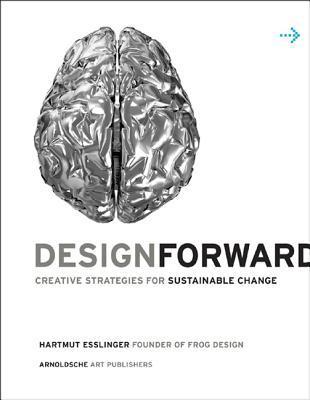
Design Forward: Creative Strategy at the Core of Sustainable Innovation
Design Forward: Creative Strategy at the Core of Sustainable Innovation
Couldn't load pickup availability
Design is one of the few holistic disciplines in the industry that combine social and emotional desires and requirements with the realities and possibilities of technology, the economy, and resource planning, thus creating a more humane and ecological world.
Hartmut Esslinger’s message is that the future challenges for businesses are increasing due to global warming, surplus production, and energy waste, and ineffective management strategies (cheap-effective) are no longer working. He is demanding new thinking toward objectives and processes and also humane capitalism! This also calls for the establishment of a creative-focused education (Creative Sciences) alongside today’s focus on natural sciences and the liberal arts. This applies not only to finding and promoting all creative talent at an early school age, but also to then communicate the necessary professional expertise so that we are all in the position to constructively address the huge challenges ahead.
Details of Book
Related Collections:
A note on book covers: while we do our best to ensure the accuracy of cover images, ISBNs may at times be reused for different editions of the same title which may hence appear as a different cover.
-
One Line Summary
Innovative strategies blending social, ecological, and technological design
-
Who is this book for?
If you're interested in design that truly makes a difference, this book offers an inspiring look at how strategic thinking can lead to sustainable innovation. Hartmut Esslinger passionately discusses the importance of integrating social and emotional needs with technological and ecological considerations, making it a compelling read for anyone who believes in shaping a humane future through creative strategies. It's a call to rethink how we approach design and management for a better world.