
This title is currently out of stock. Leave us your email address, we’d let you know when it’s in stock again!
-

A note on book covers: while we do our best to ensure the accuracy of cover images, ISBNs may at times be reused for different editions of the same title which may hence appear as a different cover.

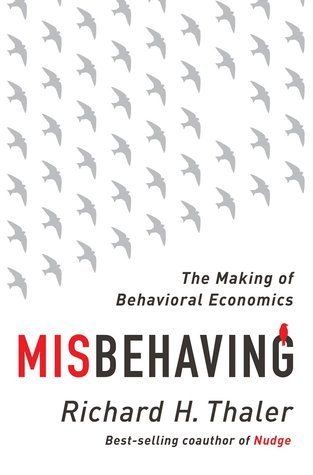
Misbehaving: The Making Of Behavioral Economics
Misbehaving: The Making Of Behavioral Economics
Couldn't load pickup availability
Traditional economics assumes rational actors. Early in his research, Thaler realized these automatons were nothing like real people. Whether buying a clock radio, selling basketball tickets, or applying for a mortgage, we all succumb to biases and make decisions that deviate from the standards of rationality assumed by economists. Our misbehavior has serious consequences. The study of human miscalculations and their effects on markets now drives efforts to make better decisions in our lives, businesses, and governments.
Coupling recent discoveries in human psychology with a practical understanding of incentives and market behavior, Thaler enlightens readers about how to make smarter decisions. He reveals how behavioral economic analysis opens up new ways to look at household finance, faculty office assignments, TV game shows, the NFL draft, and companies like Uber.
Laced with lively stories of Thaler’s battles with traditional economic thinking, Misbehaving offers a profound and entertaining insight into human foibles, highlighting the intersection of economics and psychology and its implications for individuals, managers, and policymakers.
Details of Book
A note on book covers: while we do our best to ensure the accuracy of cover images, ISBNs may at times be reused for different editions of the same title which may hence appear as a different cover.
-
One Line Summary
Humans are predictable, error-prone decision-makers in economics.
-
Who is this book for?
If you're curious about how real human behavior influences markets and economics, this book is a fascinating read. Thaler’s stories and insights shed light on why we often act irrationally and how understanding this can lead to smarter decisions for individuals and policymakers alike. It’s an engaging blend of psychology, economics, and real-world examples.